

Thanks to everyone for making my time in Australia such a wonderful experience. Thank you, mom and dad, for letting me go, thanks to everyone who kept in touch. Can't wait to see Andre, Christina, Maud, and Agnes in Paris next summer!
Adam's picture gallery here.
Friday, September 7, 2007

Thursday, June 21, 2007
Update
Hey there, dedicated reader! Everything is pretty busy around here, as I am finishing up my last final, moving out of my apartment, and packing for a trip to the Australian outback! Not much time for sightseeing or pictures in the past couple weeks, but soon I'll make up for it with pictures of Uluru and the like. Amazing how time flies.
Recently the Melbourne news has gone crazy about Christopher Hudson, a Hells Angels cyclist who murdered one and injured two others in the Central Business District a few days ago. I haven't paid much attention but there are plenty of articles. Meanwhile, it's winter here, which means I actually have to wear a coat sometimes. No colder than 40F ever. Most of the trees haven't even shed their leaves.
Anyway it's onto California after The Outback, then finally back to New York by July 10! It's been an incredible five months, full of traveling, thinking about traveling, studying instead of traveling, thinking about traveling instead of studying, spending money while traveling, etc. But I'm ready to stop studying and come back, especially since country queen Emmylou Harris doesn't perform in Melbourne.
Hope the summer is treating you all well. I'll try to write a little more about Melbourne, Uluru, and California before it's all over in a few weeks.
Wednesday, June 13, 2007
Waltzing Matilda
Although campy, this video saves me the task of explaining Australia's "unofficial national anthem," the immediately recognizable (but not always understood) Waltzing Matilda.
When Waltzing Matilda is sung seriously, the end of it gives you goosebumps.
Lyrics from article at Wikipedia.
Once a jolly swagman camped by a billabong,
Under the shade of a coolibah tree,
And he sang as he watched and waited 'til his billy boiled
"Who'll come a-Waltzing Matilda, with me?"
Waltzing Matilda, Waltzing Matilda
Who'll come a-Waltzing Matilda, with me
And he sang as he watched and waited 'til his billy boiled
"Who'll come a-Waltzing Matilda, with me?"
Down came a jumbuck to drink from the billabong,
Up jumped the swagman and grabbed him with glee,
And he sang as he stowed that jumbuck in his tucker bag,
"You'll come a-Waltzing Matilda, with me".
Waltzing Matilda, Waltzing Matilda
"You'll come a-Waltzing Matilda, with me"
And he sang as he stowed that jumbuck in his tucker bag,
"You'll come a-Waltzing Matilda, with me".
Up rode the squatter, mounted on his thoroughbred,
Down came the troopers, one, two, three,
"Where's that jolly jumbuck you've got in your tucker bag?"
"You'll come a-Waltzing Matilda, with me".
Waltzing Matilda, Waltzing Matilda
"You'll come a-Waltzing Matilda, with me"
"Where's that jolly jumbuck you've got in your tucker bag?",
"You'll come a-Waltzing Matilda, with me".
Up jumped the swagman, leapt into the billabong,
"You'll never catch me alive," said he,
And his ghost may be heard as you pass by the billabong,
"Who'll come a-Waltzing Matilda, with me?"
Waltzing Matilda, Waltzing Matilda
Who'll come a-Waltzing Matilda, with me
And his ghost may be heard as you pass by the billabong,
"Who'll come a-Waltzing Matilda, with me?"
Sunday, June 3, 2007
My Research, and Why Floyd Landis is an Ass

The Good: J.T. Brenna, master of the chemical universe, testifying at the Floyd Landis trial a couple weeks ago.

The Bad: Landis attorney Maurice Suh.

The Ugly: Floyd Landis, doped Tour de France winner and Lance wannabe.

It’s always exciting when you find that your academic research has practical applications, so imagine the rush (yeah, I said rush) you get when you read about your research professor testifying at one of the biggest trials of the year. My professor back in
Chemists are control freaks who love manipulating substances. Separation science is the art of separating different chemicals. Sometimes you can use simple techniques to separate different materials—draining water from sand, for example, or letting the water evaporate, or boiling it. Separation becomes more difficult with chemicals of similar characteristics.

A GC with some attachments. This is what I've been spending my time with, instead of friends, for the past couple months.
Gas chromatography is able to separate very similar chemicals by sending them through a long, heated column that contains some stationary substance. Depending on that stationary substance, your chemicals will be attracted, repelled, or indifferent to it. If you were then to send a gas through the column and slowly raise the temperature to push the chemicals out, they would individually exit the column, depending on their attraction to the stationary substance. A “gas chromatograph” or “GC” is also equipped with a detector and timer that record the relative amount and time of these exiting chemicals via a series of peaks. Below is a sample GC readout, which shows a number of peaks, each corresponding to a different chemical. Those further to the right have exited the column later; those to the left exited the column sooner. Larger peaks indicate a larger amount of a chemical.

For a given column, stationary substance, and temperature program, you’ll find that each chemical takes a characteristic amount of time to travel through the column (“retention time”). You can put one chemical in the GC at a time, and determine its characteristic retention time. Later, when you have a sample of many unknown chemicals, you can put them in the GC and determine the chemical by its characteristic retention time.
Sounds pretty logical, right? Well, there’s a complication to this—sometimes completely different chemicals have identical retention times. Or sometimes their retention times overlap. In these cases, you haven’t separated your substances at all! You don’t know what chemical you’re looking at, or how much of the chemical your sample had. You won’t be able to convict Floyd Landis with this shoddy data!
That’s where two dimensional GC (“GCxGC”) can be useful. GCxGC uses TWO columns, one right after the other. The different columns contain different stationary substances, so they separate chemicals in different ways. If your chemicals have identical retention times with one column, they should be separated by the second column. Below is a sample readout from a GCxGC. Now, instead of looking straight at the peaks, we’re looking above them. The two axes correspond to the retention times on the two different columns.

Look at the peaks numbered 8 to 12. They would have been very close together, if not completely unseparated, on the first column. Fortunately for us the second column has separated them. Good thing, because now we have separated each chemical, and know how much of each we have.
Dr. Brenna wants to use a GCxGC to separate steroids. Last semester, he won a $1.3M grant from USADA to develop GCxGC steroid separation. My research professor in Melbourne, Dr. Marriott, is an expert on GCxGC, and is collaborating with Dr. Brenna on this steroid project. Their lab teams are currently looking at 27 steroids on the GCxGC and determining the correct column and temperature program to individually identify the steroids. They will create a library of characteristic retention times, and eventually be able to take urine samples, put them through the GCxGC, and determine both the identity and amount of these 27 steroids in a single sample of urine. Not only that, they’ll be able to do it much more precisely than anyone has done it before.
Think of how many times Lance Armstrong was accused of using steroids by a science lab, only to have the accusation retracted, based on insufficient evidence. Think of the current Landis trial. Hopefully Dr. Brenna will be able to provide the United States Anti-Doping Agency with a superior steroid testing protocol for the future.
What exactly were the separation scientists looking for in Floyd Landis’ samples? They were looking at his level of testosterone (a steroid). Everyone has some testosterone in their body naturally, and some have much more than others. The scientists look at the amount of testosterone relative to another steroid. They have found that this ratio has an upper limit naturally, and that this limit is only exceeded when one takes extra testosterone, which is precisely what happened in the case of Floyd Landis. Sorry, Floyd. You’re out. USADA says so, and J.T. Brenna agrees.
If you’re interested in a general article recapping the Landis trial, look here.
There are some articles that discuss Dr. Brenna, part in the trial, and his financial connection to USADA. Here and here.
If you’d like to read more about gas chromatography, you’re crazy. But here, here, and here you go.
Monday, May 28, 2007
Sydney

Another vacation come and gone! Boy,
Spent the last extended weekend with the two French fries, Agnes and Maud, in

Despite the city’s outward strength and wealth, it lacked some X factor or vibrancy that the French fries and I spent some time trying to identify. We decided that the lack of college students and children, the huge Central Business District and the monoculture of all the businessmen, and the large amount of tourists lend the city a different feel than
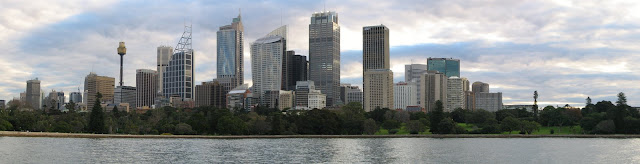
Not having enough time to do some proper research, I booked a hostel for the three of us in a place called “Kings Cross”, which sounded innocent enough. Actually, it’s

Sydney



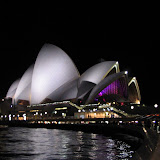
The Opera House is by far the most stunning part of the city. It seemed like the three of us were always pulling our cameras out, putting them away, walking ten paces in any direction, and pulling them out again. The Opera House stands stoically in bad weather, shines in the sunlight, and glows at night. The “shells” that resemble sails or orange peels—depends on who you talk to—were thought to be impossible to build, but with enough money anything can happen. Construction went fourteen times over budget, but Sydneysiders now think it was worth it, and the rest of the world agrees.


Agnes and I felt quite overwhelmed with the beauty of the Opera House and let loose on the Monumental Steps.
I went on a tour inside, and found it to be disappointing overall compared to the exterior (except for the designer toilets, which were a religious experience). Most of the theaters and lounges look pretty typical, except for the largest Concert Hall, which seats less than three thousand people but has a huge organ (“Grand Organ” in these parts), leaving about four pipes per person.

Thought you might be interested to know that before the Opera House began construction in the 1960s, the site was being used as a tram shed. Back in those days
Went to

Because I don’t like

Wednesday, May 23, 2007
Sunday, May 13, 2007
News Flash: Adam Steals Christina from Andre*


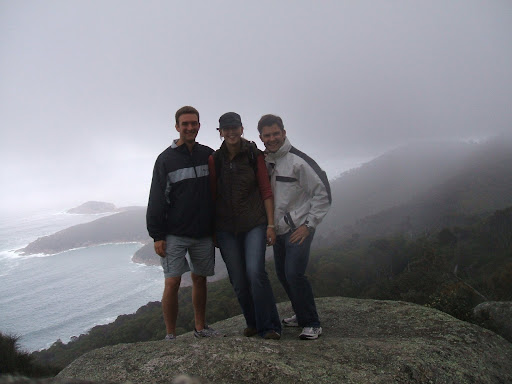 2. Befriend the couple and join them in an innocuous activity like hiking in Wilson's Promontory, the southernmost point on mainland Australia.


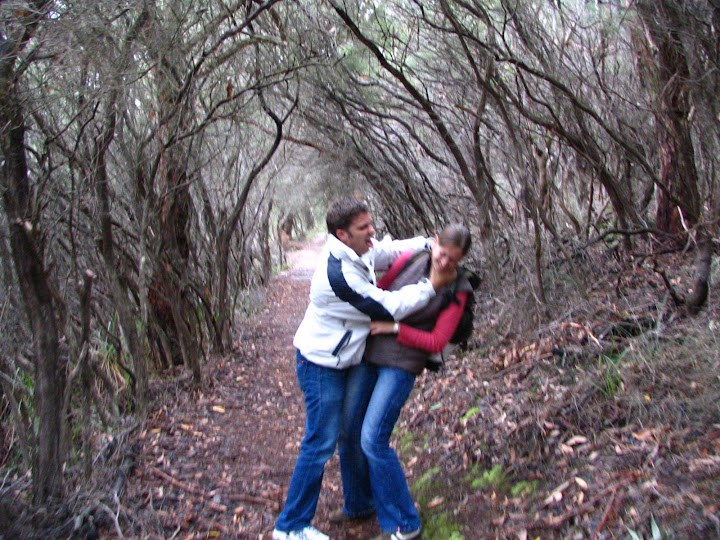 3. Sabotage the relationship from the inside by talking smack about Christina to Andre, and vice versa. Push things to the breaking point and check for telltale signs of stress, such as strangulation.
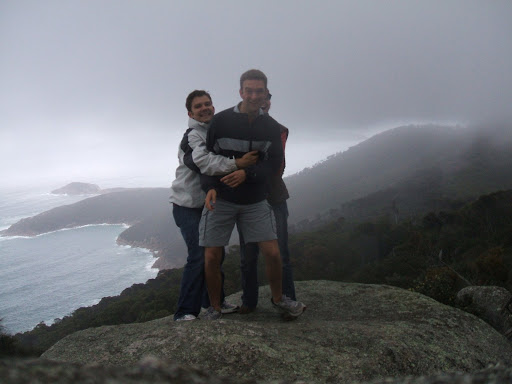 4. Come to the rescue before Andre damages the goods you're after. Try not to fall off a mountaintop while the couple fights over who gets to keep you as their "friend."
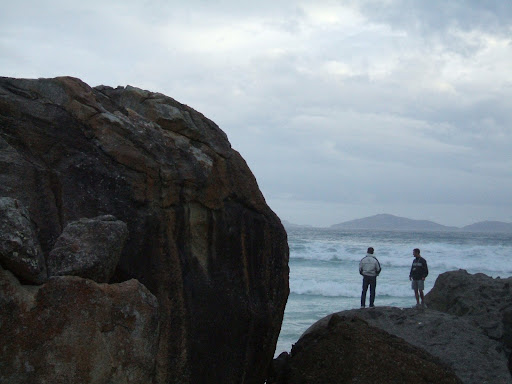 5. Play nice as you hike down the mountain, ensuring your survival. Suggest that you all work things out at a relaxing place, like a beach filled with boulders and a strong current.
 6. Push Andre off a boulder, into the strong current, when Christina isn't looking.
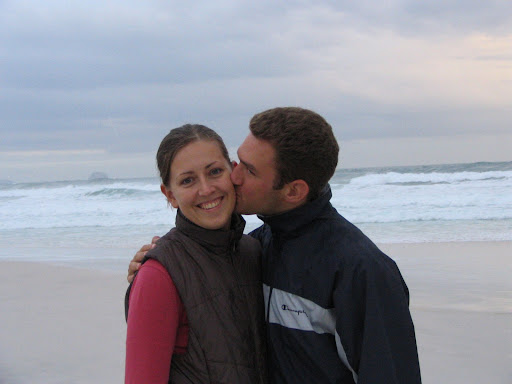 7. Move in for the kill. Hope desperately that the romantic scenery stalls any questions.


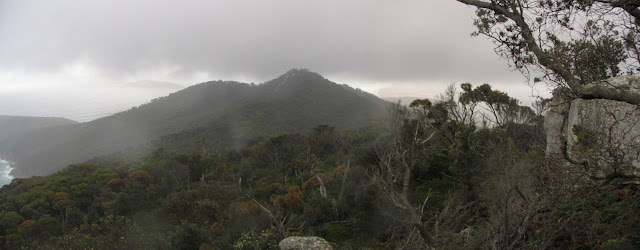 *This is all a joke.
Friday, May 11, 2007
Australia and Virginia Tech
In a country of only 20 million people, if you want to hear real news, inevitably you look outwards to what the rest of the world is doing. A couple weeks ago we heard about Virginia Tech. Only, we didn't hear about it in dribs and drabs, like some echo from across the ocean. Thanks to technology, we got to experience the events in real time.
I remember coming to the RMIT library before lab and starting my morning ritual of checking email and googling Harry Potter articles. All of the news websites were focused on Virginia--it was the evening after the shootings and the death toll kept changing--I think it increased by five in the half hour I was online. The sites were anticipating a public press conference with the VT president, and the big question at the time why the university had failed to notify its students after the first two shootings.
After a couple hours of lab I went to my philosophy tutorial, where some of the other students expressed their dismay for the victims and asked me whether I thought the gun control laws might be changed to prevent this from happening in the future. The conversation turned political and I told them since nothing had been dramatically changed after Columbine in 1999 it was unlikely that gun control would become a big issue now. I also mentioned that the NRA might be pretty strong in Virginia, and that it would suggest that if other students had guns, the shooter would have been stopped (and it did, predictably). And with a national election coming up, the big politicians wouldn't be going out on a limb and alienating themselves.
The six other students and the professor (he's Scottish, so he doesn't really count) seemed pretty disappointed that the US could go from shooting to shooting without "learning from their mistake." I found this to be the general sentiment in Melbourne, whomever I spoke to. Even Australian TV correspondents in Virginia made of point of telling their anchors that although it went against their personal convictions, they thought gun control was unlikely to change in the US.
You see,Australia Port Arthur , Tasmania Port Arthur Australia Toyota US
The newly elected Prime Minister John Howard worked closely with state governments to increase gun control across the country. At the time, he said that Australia couldn't risk having a gun culture like the US (and this was in 1996). A National Agreement on Firearms was composed two weeks after the massacre, which prohibited the sale of automatic and semi-automatic firearms, and offered a "gun buyback" program. Australian citizens returned 643,726 guns (many were soon to be prohibited) and received $320AUD from the federal government.
Martin Bryant was sent to jail for 35 life sentences without parole. If you go to Port Arthur, as I did in February (pictures of the convict settlement ruins start here), you'll find some memorials set up in various locations, some maintained by the town, others by family members. You'll also find a bunch of reading material on the massacre, as no one in town wants to explain it to yet another tourist.
So when Australians think about America's most recent massacre, I'm sure their sympathies and regrets are as sincere as anyone's. But for the life of them, they can't understand why the nation they emulate, with its celebrities they worship, fashion they borrow, and sitcoms they enjoy, should be so obtuse to consider what happened in Virginia just a "tragedy," and not also "a learning experience."
I remember coming to the RMIT library before lab and starting my morning ritual of checking email and googling Harry Potter articles. All of the news websites were focused on Virginia--it was the evening after the shootings and the death toll kept changing--I think it increased by five in the half hour I was online. The sites were anticipating a public press conference with the VT president, and the big question at the time why the university had failed to notify its students after the first two shootings.
After a couple hours of lab I went to my philosophy tutorial, where some of the other students expressed their dismay for the victims and asked me whether I thought the gun control laws might be changed to prevent this from happening in the future. The conversation turned political and I told them since nothing had been dramatically changed after Columbine in 1999 it was unlikely that gun control would become a big issue now. I also mentioned that the NRA might be pretty strong in Virginia, and that it would suggest that if other students had guns, the shooter would have been stopped (and it did, predictably). And with a national election coming up, the big politicians wouldn't be going out on a limb and alienating themselves.
The six other students and the professor (he's Scottish, so he doesn't really count) seemed pretty disappointed that the US could go from shooting to shooting without "learning from their mistake." I found this to be the general sentiment in Melbourne, whomever I spoke to. Even Australian TV correspondents in Virginia made of point of telling their anchors that although it went against their personal convictions, they thought gun control was unlikely to change in the US.
You see,
The newly elected Prime Minister John Howard worked closely with state governments to increase gun control across the country. At the time, he said that Australia couldn't risk having a gun culture like the US (and this was in 1996). A National Agreement on Firearms was composed two weeks after the massacre, which prohibited the sale of automatic and semi-automatic firearms, and offered a "gun buyback" program. Australian citizens returned 643,726 guns (many were soon to be prohibited) and received $320AUD from the federal government.
Martin Bryant was sent to jail for 35 life sentences without parole. If you go to Port Arthur, as I did in February (pictures of the convict settlement ruins start here), you'll find some memorials set up in various locations, some maintained by the town, others by family members. You'll also find a bunch of reading material on the massacre, as no one in town wants to explain it to yet another tourist.
So when Australians think about America's most recent massacre, I'm sure their sympathies and regrets are as sincere as anyone's. But for the life of them, they can't understand why the nation they emulate, with its celebrities they worship, fashion they borrow, and sitcoms they enjoy, should be so obtuse to consider what happened in Virginia just a "tragedy," and not also "a learning experience."
Tuesday, May 8, 2007
ANZAC Day (April 25)

So ANZAC Day is probably the most important day in Australia, as it commemorates the Australian and New Zealand Army Corps who fought side by side in their first major battle--on the the Gallipoli Peninsula of Turkey, during WWI. I had been meaning to write about the history of ANZAC Day and the ANZACs, as we had talked about it to death in my Intro to Australia class. However, now that it's crunch time in the semester, I've been spending lots of time in the chemistry lab, writing school papers, and travelling on the weekends, so in lieu of a description of the holiday from me, check it out here--Wikipedia has some great external links at the end of the article too.
Basically I was at Federation Square to watch a parade of other countries, bands, and many veterans (not real ANZACs, they're almost all gone by now) walk across the Yarra River to the Shrine of Remembrance, in the Botanic Gardens. I was surprised to see some Turks in the procession (German Andre: "That's like Nazis marching in a WWII parade!"), but they made sure to hold up a sign indicating the reconciliation between the two nations after WWI.

It's a sign of how connected Australia felt to the British Empire that only 16 years after federation it sent thousands of its sons to fight for the Allied Forces. Though the battle was ultimately a huge failure in just about all military aspects, the ANZAC myth of selfless sacrifice and duty to one's country (and empire) has lasted to the present. It's the most important holiday in Australia, as I said, and many others will tell you that the Australian identity was formed on the fields of Gallipoli.
More pictures, and two videos--bagpipes and an explanation of ANZAC Day by some professor. Sorry that it's so shaky--I was zooming in all the way.


Sunday, April 29, 2007
Melbourne
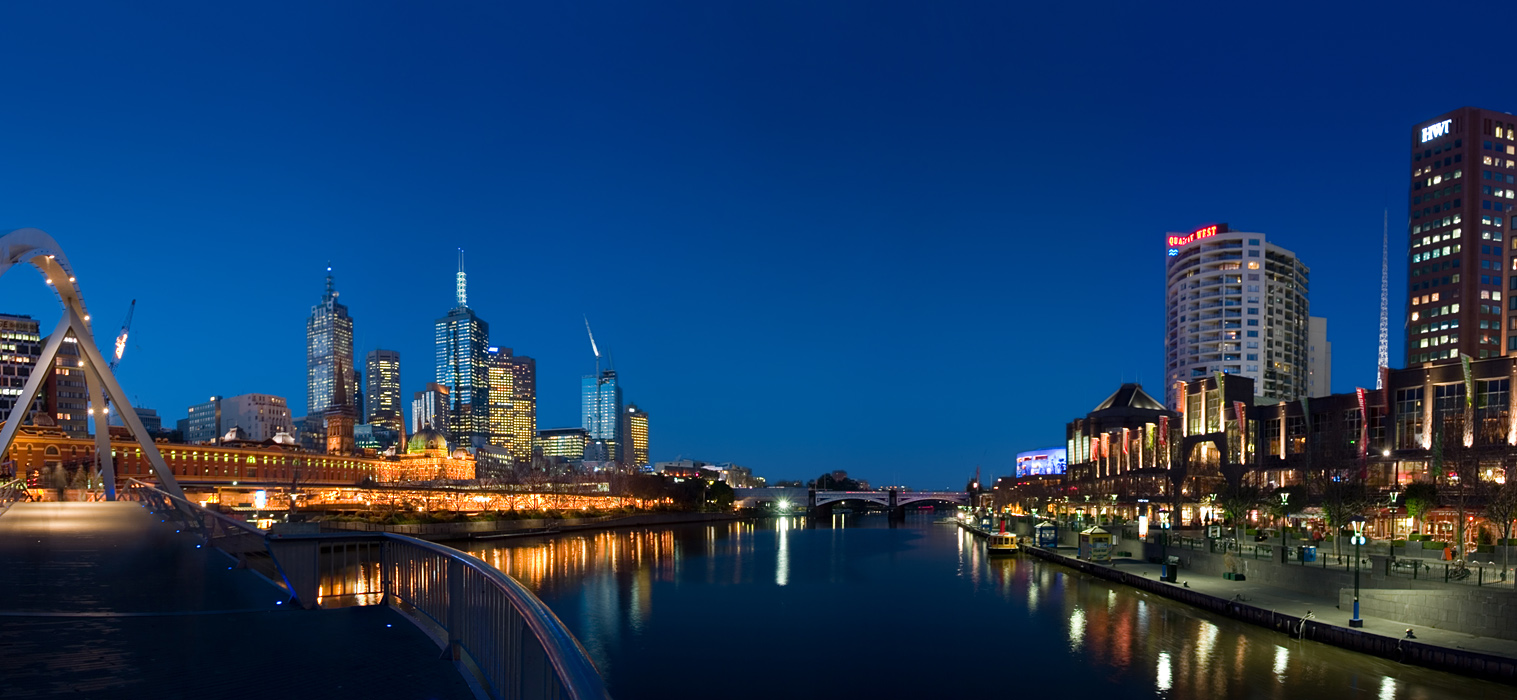
So I’ve been hesitating to write anything about

Melbourne's kind of like New York City, just more affordable, smaller, cleaner, with nicer people and better weather. It's quite culturally diverse, though like the rest of Australia it has a familiar American/British feeling to it. It would go well on the west coast of the US.
 Though it's smaller than Sydney by half a million--3.7 million residents here--Melbourne is the place to go in Australia for music, cuisine, art, sports, and just about anything good. Sydney has some beautiful harbors, and apparently there's an opera house, but it's also considered to be a worker's city and is the financial capital of Australia. Ironically, I just read today in a freebee newspaper that more international businessmen prefer to meet in Melbourne than Sydney, presumably so they can get more of a change of scenery.
 Marvellous Melbourne gained its wealth from the Australian Gold Rush in the 1850s--right after the American one. Victorian architecture was all the rave back then, so when you go walking around Melbourne today, you'll see old buildings like this mismashed with skyscrapers. It's kind of like Cornell's West Campus, where Gothic meets Alice Cook--except it looks much better.
One of the central hubs of the city is Flinders Street Station and Federation Square. These are right next to each other, Flinders Station pictured below. I've been to a concert at Federation Square, walked to the National Gallery of Victoria, shot an interview on the Yarra River (pictured below), and spent a couple afternoons walking through the Royal Botanic Gardens, all of which are just a couple blocks from the square. If you're meeting someone in Melbourne, chances are you'll choose to meet here.

 Those Gardens I mentioned are indisputably the best in Australia and among the best in the world. The central Royal Botanic Gardens are right in the middle of Melbourne, on the Yarra River, and cover 87 acres. There are more Royal Gardens in greater Melbourne, covering 900 acres, and tons of other parks and garden collections, making Melbourne "the garden city." The central Royal gardens grouped according to the environment they emulate—Australian rain forest, “dry” rain forest,
 I haven't taken many pictures of the gardens, not because they aren’t beautiful, but because every acre is so well landscaped that there’s a picture around every corner. Anyway,

When Melburnians aren't at the Royal gardens or Federation Square, they're at a sports game. Melbourne is obsessed with sports, particularly "footy" (Australian rules football, see the previous blog entry), and there are usually 35,000 spectators per game of footy... and five games per week (Wikipedia says). But Melburnians also dabble in soccer, rugby, cricket, car racing, tennis, any water sport imaginable, and others. Australia may be sporty, but Melbourne is the national sports capital.

 Moving on to transportation, Melbourne, like the rest of Australia, drives on the wrong (left) side of the road. But the quirkiness doesn't stop there. Remember those old electrical trolleys that used to run throughout cities about a hundred years ago? The rest of the world progressed, but Melbourne didn't, and Melburnians think their "trams" are "distinctive." I wouldn't have a problem with their freakishly outdated public transportation if it didn't include cables over every city street. I often feel like I'm caught in a giant spider web when I look up at a street intersection. To be fair, though, Melbourne also uses trains and buses, you can use one "metrocard" to get onto all of them, and the public transportation system is extensive (goes throughout the suburbs) and reasonably clean. If you're unable to walk you can still easily get around in this city.
 Melbourne's trams are given a high priority on the road, since they're often packed full of people. Their tracks are in the middle of the road, and car lanes are outside. In some areas, cars can drive in tram lanes. But not in the Central Business District, where I go to school. This creates some strange road rules--such as Hook Turns. To turn left in the CBD, you need to get over to the right lane, wait at the side of the intersection, and when both lanes of traffic have finally stopped, you cross all lanes to turn right. Only in Melbourne.

There are so many Asians in Melbourne that sometimes I feel like I never left Cornell. There's a big Asian influence in Australia in general, given its geography, and Melbourne's Chinatown is one incarnation of it. Great atmosphere, cheap restaurants.
And last but certainly not least, I have just been made aware of the "Melbourne Shuffle," an underground dance movement that's been going on here for decades. I haven't seen the shuffle in person, but when I do, you can rest assured that I will certainly point and laugh. It looks like the unwanted combination of break dancing and river dancing, with an emphasis on unwanted. Hope you enjoy the video. Just don't try this at home.
Subscribe to:
Posts (Atom)